
Hi, I'm Nancy H. I live in Oregon. Craig "The Water Guy" Phillips asked me to share my honest homeowner experience with the city tap water and the SoftPro ECO™ City Water Softener - Best Water Softener Systems for City Water I purchased.
This is how my water softening journey unfolded. I hope my real-world experience helps you make an informed decision.
Why I Desperately Needed a Water Softener Solution
Living in Oregon, I thought our city water would be naturally soft and clean. Boy, was I wrong. After moving into our home three years ago, I started noticing some seriously frustrating problems that were affecting our daily life and wallet.
The first red flag was the crusty white buildup on everything. My beautiful stainless steel appliances looked constantly dirty, no matter how much I scrubbed them. The coffee maker developed thick mineral deposits within months, and I was descaling it every few weeks. My dishwasher left spots on every single glass and dish, making me feel embarrassed when guests came over.
But the real wake-up call was my water heater.
During a routine maintenance check, our plumber showed me the mineral buildup inside. He explained that hard water was reducing efficiency and shortening the lifespan of our expensive tankless unit. The calcium and magnesium in our city water supply were creating scale deposits throughout our plumbing system.
I tested our water hardness using a simple test kit from the hardware store. The results showed 18 grains per gallon - that's considered very hard water. No wonder my skin felt dry and itchy after showers, and my hair looked dull and lifeless no matter what expensive products I used.

The financial impact was adding up fast. We were going through twice as much laundry detergent and dish soap, constantly buying bottled water for drinking, and facing potential early replacement of major appliances. Something had to change.
My Research Journey and Why I Chose SoftPro ECO
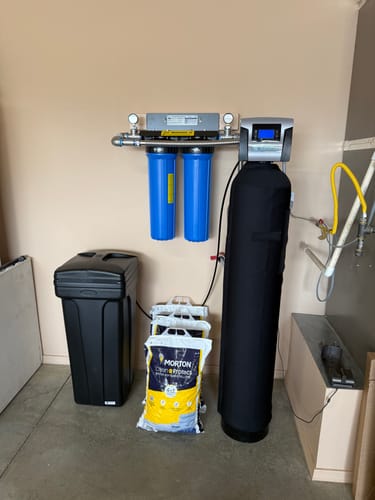
I spent weeks researching water softener options, reading reviews, and trying to understand the technical differences. The market seemed overwhelming with salt-based systems, salt-free conditioners, reverse osmosis units, and various brands claiming to be the best.
Initially, I was drawn to salt-free systems because they seemed more environmentally friendly. However, after digging deeper into the science, I learned that true water softening requires ion exchange - swapping calcium and magnesium ions for sodium ions. Salt-free systems condition water but don't actually remove hardness minerals.
What made the SoftPro ECO stand out was its city water optimization.
Unlike generic softeners designed for well water, this system specifically targets the challenges of treated municipal water. Our city adds chlorine and other chemicals that can interfere with standard resin beads, but the SoftPro ECO uses specialized resin that handles chlorinated water more effectively.
The capacity was perfect for our family of four - 48,000 grains, which translates to about 2,600 gallons of softened water with our hardness level. The upflow regeneration design caught my attention because it uses less salt and water during the cleaning cycle compared to traditional downflow systems.
I also appreciated the digital control head with LCD display. Many cheaper units have basic timer controls, but this system monitors actual water usage and only regenerates when needed. This efficiency was important to me both environmentally and financially.
Unboxing and First Impressions
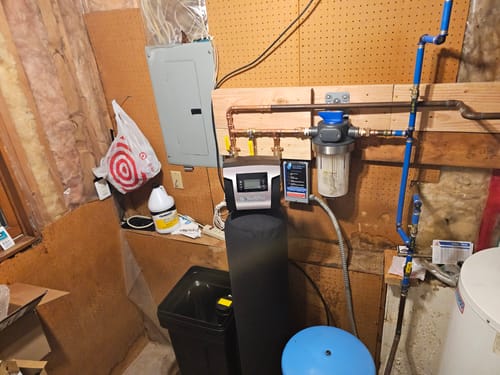
The SoftPro ECO arrived in excellent condition, packaged better than I expected. The main unit weighs about 120 pounds when empty, so I definitely needed help moving it into position in our utility room.
The build quality immediately impressed me. The fiberglass tank feels solid and substantial, not like the cheaper plastic tanks I'd seen on some models. The control head looks modern and well-made, with a clear LCD display and intuitive button layout.
Everything was included: bypass valve, installation fittings, drain line, and detailed instructions. The manual was actually readable - not just poorly translated technical jargon. They included a step-by-step video guide accessible via QR code, which proved invaluable during installation.
One pleasant surprise was the compact footprint. At 10 inches in diameter, it fit perfectly in the space I'd measured, leaving room for the salt storage and maintenance access.
Installation Experience and Setup Process

I'll be honest - I was nervous about installing this myself. The video guide made it look straightforward, but dealing with plumbing always makes me anxious about potential leaks and water damage.
The installation took me about four hours, working carefully and double-checking everything. The hardest part was cutting into the main water line to install the bypass valve. I used a pipe cutter and SharkBite fittings to avoid needing to solder copper pipes.
The bypass valve installation was actually genius.
It allows you to route water around the softener for maintenance or emergencies. I installed it on the cold water line after the water meter but before it splits to the water heater and fixtures.
Programming the control head was surprisingly simple. I entered our water hardness (18 grains), household size (4 people), and iron content (our city water has minimal iron). The system automatically calculated regeneration frequency and salt dosage.
The drain line connection required some creativity. The unit needs to drain about 50 gallons during regeneration, so I connected it to our utility sink drain with an air gap to prevent backflow contamination.
First startup was exciting and nerve-wracking. I slowly opened the water valves, checking every connection for leaks. Everything stayed dry, and within minutes we had soft water flowing through our entire house.
Performance Analysis: Real-World Results After 8 Months
The transformation was noticeable within 24 hours.
The first shower felt completely different - my skin didn't feel tight and dry afterward. My hair was softer and more manageable, and I needed less conditioner.
I tested the water hardness again after one week: 0 grains per gallon. The ion exchange resin was completely removing calcium and magnesium, just as promised. Our TDS (total dissolved solids) reading dropped from 285 ppm to 245 ppm, reflecting the mineral removal.
The appliance improvements were dramatic. Our dishwasher now produces spot-free dishes and glassware. I haven't had to descale the coffee maker once in eight months. The washing machine uses 30% less detergent, and our clothes come out cleaner and softer.
Water flow remained excellent throughout the house. I was worried about pressure drops, but the upflow design maintains 15 GPM flow rate even during peak usage times. Morning showers with simultaneous dishwasher operation show no noticeable pressure reduction.
The regeneration cycle runs automatically every 8-10 days, depending on our usage patterns. It operates at 2 AM, taking about 90 minutes to complete. We've never been awakened by noise, and there's no disruption to our daily routine.
Salt consumption has been very reasonable - about 40 pounds per month for our family. The high-efficiency resin and upflow regeneration use approximately 2 pounds of salt per regeneration cycle, much less than our neighbor's older downflow system.

Daily Life Improvements and Unexpected Benefits
The quality of life improvements have exceeded my expectations in several ways. Cleaning the bathroom takes half the time now because there's no soap scum buildup on shower doors and fixtures. The white film on faucets and showerheads has completely disappeared.
My skin and hair health improved significantly.
I suffer from eczema, and the harsh minerals in our city water were definitely aggravating the condition. Since installing the softener, I use less moisturizer and my skin feels comfortable after bathing.
Our water heater efficiency has noticeably improved. The last utility bill showed a 12% reduction in gas usage for water heating. Our plumber confirmed during the annual service that no new scale deposits are forming, potentially extending the unit's lifespan by years.
Laundry results are fantastic. Colors stay brighter longer, whites don't get dingy, and fabrics feel softer without fabric softener. I've reduced detergent usage by one-third while getting better cleaning results.
The taste improvement was unexpected but welcome. While the softener doesn't remove chlorine taste (that would require a carbon filter), the water feels smoother and more pleasant to drink. We've almost eliminated bottled water purchases.
Guests consistently comment on how soft the water feels and how clean their hair looks after showering. It's become a point of pride for our home.
Operating Costs and Long-Term Value
After eight months of operation, I can provide realistic cost analysis based on best water softener for city water actual usage rather than manufacturer estimates.
Salt costs run about $12 per month using Morton System Saver pellets.
I buy 40-pound bags for $6 each at the home improvement store. The system holds 200 pounds in the brine tank, so I refill it monthly.
Electricity consumption is minimal - the digital control head uses about 2 watts continuously, adding roughly $2 to our monthly bill. Water usage for regeneration is approximately 50 gallons per cycle, costing about $1.50 per month with our utility rates.
Total monthly operating costs: roughly $15.50. Compared to the $40 we were spending monthly on bottled water, extra detergents, and cleaning products, we're saving money while enjoying better water quality.
The resin tank should last 10-15 years with proper maintenance. The control valve has a 10-year warranty, giving me confidence in long-term reliability. At current usage rates, the system will pay for itself in saved appliance repairs and replacement costs within three years.
I've calculated that protecting our $2,800 tankless water heater from scale damage alone justifies the investment. Add in extended life for the dishwasher, washing machine, and plumbing fixtures, and the value proposition is compelling.
Final Assessment: Is the SoftPro ECO Worth It?
Would I buy this system again?
Absolutely. The SoftPro ECO has solved every hard water problem we experienced while providing benefits I didn't anticipate.
This system is perfect for homeowners dealing with city water hardness who want a reliable, efficient solution that doesn't require constant maintenance or professional service. The specialized resin handles chlorinated water beautifully, and the upflow design maximizes salt and water efficiency.
The installation is manageable for DIY-minded homeowners, though calling a plumber is certainly an option. The digital controls take the guesswork out of operation, and the regeneration scheduling based on actual usage optimizes performance and costs.
Consider alternatives if you have extreme budget constraints, very low water usage (1-2 people), or specific space limitations. For most families dealing with moderately hard city water, this represents excellent value and performance.
After eight months of ownership, I'm thoroughly satisfied with this investment in our home's water quality. The combination of effective hardness removal, operational efficiency, and build quality makes the SoftPro ECO an easy recommendation for anyone serious about solving their hard water problems.
