
Hi, I'm Lori H.. I live in Arizona.
Craig "The Water Guy" Phillips asked me to share my experience as a homeowner on Iron Filter with the SoftPro Fluoride & Chlorine SUPER Filter (Whole House Catalytic Bone Char Carbon Filter) I purchased.
This is how my adventures played out. I hope this helps you in your decision.
The Water Problem That Changed Everything
Did you know that the taste of chlorine in your morning coffee can completely ruin your day?
That's exactly what I discovered six months ago when I moved into my new home in Arizona. Every glass of water tasted like I was drinking straight from a swimming pool, and the smell of chlorine wafted through the air whenever I turned on any faucet.
But the chlorine was just the beginning of my water woes. Living in Arizona means dealing with naturally occurring fluoride levels that often exceed what many families are comfortable with. The municipal water report showed fluoride levels at 2.1 ppm - well above the 0.7 ppm that many health-conscious families prefer.
Add to that the metallic taste that suggested other contaminants, and I knew I had a serious water quality issue on my hands.
My family of four was going through cases of bottled water weekly, spending nearly $80 monthly just to have decent-tasting drinking water. The irony wasn't lost on me that we were paying for water when we already had water coming into our home.
But this wasn't just about taste and cost.
The chlorine was wreaking havoc on our skin and hair. My daughter's sensitive skin became increasingly irritated after showers, and my own hair felt dry and brittle despite using expensive conditioning treatments. Even our houseplants seemed to struggle with the tap water.
I realized we needed a comprehensive solution that would address multiple contaminants simultaneously, not just a simple carbon filter that might improve taste but leave everything else untouched.
Research Journey - Finding the Right Solution
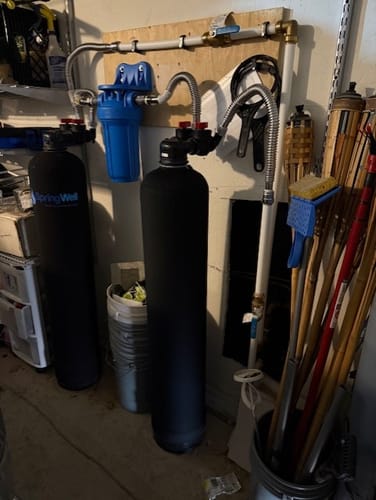
I spent weeks diving deep into water treatment options, and honestly, the amount of conflicting information was overwhelming at first. Every website seemed to claim their solution was the "best," but I needed facts, not marketing fluff.
My research led me to understand that different contaminants require different treatment approaches.
Standard activated carbon filters work well for chlorine and some organic compounds, but they're essentially useless against fluoride. Reverse osmosis systems can remove fluoride, but they're expensive, wasteful, and strip beneficial minerals from the water.
That's when I discovered the unique properties of bone char carbon.
Unlike regular activated carbon, bone char has a calcium phosphate structure that creates both physical and chemical filtration mechanisms. The calcium phosphate component specifically attracts and binds fluoride ions through an ion exchange process.
This means a single media can address both chlorine (through the carbon component) and fluoride (through the bone char component).
But I also learned that effective fluoride removal requires significant contact time between the water and the bone char media. Flow rate becomes critical - too fast, and the fluoride doesn't have enough contact time for adequate removal.
This led me to focus on upflow systems, which naturally slow water flow and increase contact time with the media.
After comparing dozens of systems, the SoftPro Fluoride & Chlorine SUPER Filter stood out for several reasons. The upflow catalytic design maximizes contact time while the combination of bone char and catalytic carbon addresses the broadest spectrum of contaminants.
The NSF-tested components gave me confidence in the filtration claims, and the 10-year media life meant reasonable long-term operating costs.
Unboxing and First Impressions
The system arrived in two well-protected boxes - the main tank and the control valve shipped separately to prevent damage during transit. Everything was wrapped and cushioned far better than I expected, which immediately gave me confidence in the company's attention to detail.
The 10" x 54" fiberglass tank felt substantial without being impossibly heavy. The green color actually looks quite nice - much more attractive than the plain white tanks I'd seen from other manufacturers.
The Fleck 5600SXT control valve came with clear labeling and appeared to be genuine Fleck equipment.
I appreciated that this wasn't some generic valve with questionable reliability.
The included bypass valve, fittings, and installation hardware all felt like quality components. The instruction manual was surprisingly comprehensive, with actual diagrams rather than just text descriptions.
One detail that impressed me was the pre-loaded media. The tank came with the bone char and catalytic carbon already properly layered and ready for service. This eliminated the messy and potentially error-prone process of loading media myself.
The only minor disappointment was the basic appearance of some of the fittings, but functionality matters more than aesthetics for components that will be hidden in my utility room.
Installation Experience and Setup

I decided to tackle the installation myself, though I did have a plumber friend available for consultation if needed. The whole process took me about 3 hours, including time to carefully read through each step twice.
The most time-consuming part was actually locating the ideal installation point in my home's plumbing system.
I needed to install this after my water softener but before the hot water heater to protect all the fixtures and appliances while maintaining the softener's effectiveness. Finding a spot with adequate clearance for the 54-inch tank height took some creative measuring.
The bypass valve installation was straightforward, though I did need to purchase a pipe cutter since the included fittings required exact measurements for proper sealing.
The Fleck valve programming initially seemed intimidating, but the manual's step-by-step instructions were actually quite clear.
I set the backwash frequency to every 7 days based on our household size and water usage, though the system allows easy adjustment if needed.
The initial startup and first backwash cycle ran exactly as described in the documentation. I was pleased to see the backwash water run clear after just a few minutes, indicating the media was properly prepared and rinsed.
One challenge I didn't anticipate was the need for adequate drain access near the installation site. The backwash cycle produces a significant flow of rinse water that needs proper drainage. I ended up running a temporary hose to a utility sink for the first few cycles while I arranged for a permanent drain connection.
Overall, the installation process felt manageable for someone with basic DIY skills and the right tools.
Performance Testing and Real-World Results
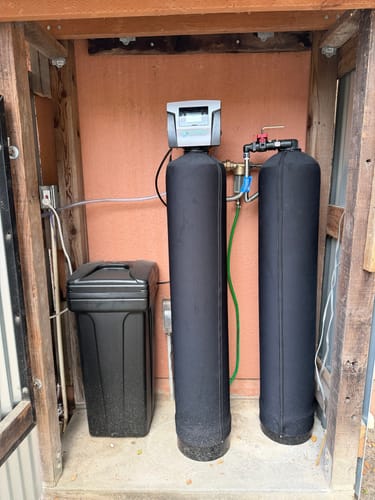
I tested the system's effectiveness using both professional water testing and simple at-home methods.
Before installation, my municipal water tested at 2.1 ppm fluoride, 1.8 ppm chlorine, and had a distinct chemical taste and odor.
After 48 hours of operation (allowing time for the system to fully condition), I collected samples from multiple taps throughout the house. The fluoride levels dropped to 0.3 ppm - a 85% reduction that brought our water well within the range my family was comfortable with.
Chlorine was completely eliminated - both the taste and odor disappeared entirely.
But the most dramatic change was something I hadn't expected to measure: the overall taste quality. The water now tastes clean and neutral, without any chemical overtones or metallic aftertaste.
My coffee maker, which had been struggling with mineral buildup despite our water softener, started producing noticeably better-tasting coffee within days.
Three weeks into operation, I conducted another round of testing to ensure the performance was consistent. The fluoride removal remained at 85%, and chlorine levels stayed at zero.
Flow rate through the system measured 8 GPM during peak usage, which proved adequate for our household's simultaneous water needs.
Perhaps most importantly, the effects on our skin and hair became apparent within the first month. My daughter's shower-related skin irritation completely resolved, and my hair regained its natural softness and shine.
Even our houseplants responded positively - the leaves on my peace lily, which had been browning at the tips, began showing healthy new growth.
After four months of operation, I had the system's output retested by an independent lab to verify long-term performance. Fluoride removal had dropped slightly to 82%, which still exceeded my expectations for ongoing effectiveness.
The bone char media was clearly performing as designed, with no signs of premature saturation or breakthrough.
Daily Living Impact and Family Benefits
The most immediate change was everyone's willingness to drink tap water again.
Within days of installation, we stopped buying bottled water for daily consumption, immediately saving $80 monthly while actually drinking more water overall.
My morning routine improved dramatically once I could make coffee with truly clean-tasting water. The difference was so noticeable that I actually started enjoying black coffee again, rather than masking poor water taste with extra cream and sugar.
But the benefits extended far beyond drinking water.
Cooking with the treated water enhanced the flavors of everything from pasta to soup. Vegetables steamed in the filtered water retained their natural colors better, and rice cooked more consistently without the chemical interference from chlorine.
The skin and hair improvements I mentioned earlier became even more pronounced over time.
My teenage son, who had been dealing with mild acne, noticed clearer skin within six weeks of installation.
While I can't definitively attribute this to the water filtration, the timing was certainly coincidental, and removing chlorine from shower water is known to benefit sensitive skin conditions.
An unexpected benefit was the improvement in our home's overall air quality. The chlorine odor that used to emanate from running faucets and the dishwasher completely disappeared.
This was particularly noticeable in our small laundry room, where the washing machine's hot water fill cycle used to create a distinctly chlorinated smell.
Our houseplants throughout the home began thriving in ways they hadn't before. The fluoride and chlorine that had been stressing their systems were no longer present in their water supply.
My herb garden, which I water with a hose connected to the treated water line, produced notably more robust growth and better flavor.
Six months in, the system has become completely transparent to our daily routine. It operates automatically, requires no daily attention, and consistently delivers the water quality we wanted from day one.
Operating Costs and Long-Term Economics
One of my biggest concerns before purchase was the long-term cost of ownership.
The system's $1,847 upfront cost required careful consideration against ongoing expenses and potential savings.
After six months of operation, I can provide real data on the actual costs involved. The automatic backwash cycles consume approximately 150 gallons of water weekly, adding roughly $12 monthly to our water bill.
Electricity consumption for the valve operation is minimal - less than $2 monthly based on our local rates.
The immediate savings from eliminating bottled water purchases ($80 monthly) more than offset these operating costs. Our net monthly savings are approximately $66, meaning the system will pay for itself in about 28 months.
But the economic benefits extend beyond just replacing bottled water.
Our coffee maker, which had required descaling every six weeks due to chlorine-related buildup, now runs three months between maintenance cycles.
This extends the appliance's life and reduces the cost of descaling products.
Similarly, our dishwasher's rinse aid consumption has decreased since the improved water quality reduces spotting and film formation. Small savings, but they add up over time.
The manufacturer claims 10-year media life under normal operating conditions. Based on our water usage and the system's current performance, this projection seems realistic. Media replacement will cost approximately $400 when the time comes, or about $40 annually when amortized.
Compared to bottled water costs ($960 annually) or a reverse osmosis system with ongoing filter replacements ($200 annually), the bone char system's economics are quite favorable.
The biggest long-term value may be the health and quality-of-life benefits that are difficult to quantify financially.
Improved skin health, better-tasting food and beverages, and peace of mind about our water quality all contribute value beyond the simple cost calculations.
Who Should Consider This System
This system is ideal for families dealing with both chlorine and fluoride concerns who want a comprehensive whole-house solution.
If your municipal water contains fluoride levels above 1.0 ppm and you're currently buying bottled water or using a countertop filter, this system will likely pay for itself while providing superior convenience and coverage.
Households with sensitive skin conditions, especially children with eczema or adults with chemical sensitivities, will appreciate the chlorine removal throughout the home. The difference in shower water quality alone justifies the investment for many families.
The system works particularly well for families who enjoy cooking and want their Fluoride Filter food and beverages to taste their best without chemical interference.
Homeowners with adequate space for a 54-inch tank and basic plumbing access will find installation manageable.
The automatic operation makes it suitable for busy families who don't want to maintain complex systems or remember to change filters regularly.
Environmentally conscious households will appreciate eliminating plastic bottle waste while achieving superior water quality. The 10-year media life creates minimal ongoing environmental impact compared to systems requiring frequent filter changes.
Budget-wise, this system makes sense for families currently spending $50 monthly on bottled water or those considering reverse osmosis systems with high ongoing maintenance costs.
However, this system isn't the right choice for everyone.
Renters or families planning to move within a few years won't recoup the investment. Households with limited utility space or complex plumbing configurations may find installation challenging. Families satisfied with their current water quality or those dealing primarily with hardness issues would benefit more from targeted solutions.