
Hi, I'm Jake B.. I live in Colorado. Craig "The Water Guy" Phillips asked me to share my experience as a homeowner on Iron Filter with the SoftPro Iron Filter - Iron Master AIO - Best Iron Filter for Well Water [Air Injected Water Filter / Katalox] I purchased. This is how my adventures played out. I hope this helps you in your decision.
Did you know that iron contamination affects over 6 million private wells across the United States?
If you're dealing with rusty-tasting water, orange stains on everything, and the constant embarrassment of discolored laundry, you're not alone. For three years, I battled these exact problems in my Colorado home, trying everything from cheap sediment filters to expensive water softeners that promised to solve my iron issues but delivered disappointing results.
After installing the Iron Master system six months ago, I can confidently say it has completely transformed our water quality. The orange stains that once plagued our sinks and toilets are gone, my wife's white shirts stay white, and guests no longer make faces when they taste our tap water.
In this detailed review, I'll share my complete experience with the Iron Master iron filter—from the initial research and installation process to the measurable results I've seen in my daily life. Whether you're considering this system or just starting your research into iron filtration solutions, this honest assessment will give you the real-world insights you need to make an informed decision.
The Iron Problem That Changed Everything
Living in Colorado, I thought the biggest water challenge would be hard water from our well. Boy, was I wrong. The iron contamination iron filter for well in our water was like living with a rusty faucet that never stopped running.
Every morning started with the same frustrating routine. I'd turn on the bathroom faucet and watch orange-tinted water flow out for the first few seconds. Our white porcelain sink had permanent rust stains that no amount of scrubbing could remove. The toilet bowls developed these stubborn orange rings that made our bathrooms look perpetually dirty, no matter how often we cleaned.
But the real breaking point came when my wife pulled her favorite white blouse out of the washing machine—now a lovely shade of orange.
The iron in our well water measured 3.2 parts per million (PPM), which doesn't sound like much until you realize the EPA recommends keeping iron levels below 0.3 PPM for aesthetic reasons. Our water literally contained ten times the recommended amount of iron. This explained why our coffee tasted metallic, why our ice cubes had an orange tint, and why our guests always reached for bottled water.
The problem goes deeper than just appearance and taste. High iron levels create the perfect environment for iron bacteria to thrive.
These bacteria don't just affect water quality—they create biofilms that clog pipes, reduce water pressure, and can even damage appliances. I started noticing our dishwasher wasn't cleaning as effectively, and our water heater seemed to be working harder than usual.
Beyond the practical issues, there was the social embarrassment. How do you explain to dinner guests why the water tastes like pennies?
We found ourselves buying cases of bottled water for drinking and cooking, which added up to about $40 per month. For a family that chose well water to be more self-sufficient, we were becoming increasingly dependent on store-bought solutions.
The iron contamination also affected our daily routines in ways I hadn't anticipated. Showers left our skin feeling dry and our hair looking dull. The iron deposits in our showerheads reduced water pressure to a disappointing trickle. Even simple tasks like filling a glass of water became exercises in timing—you had to let the faucet run until the water cleared up.
I realized we needed a real solution, not another temporary fix.
My Research Journey Into Iron Filtration
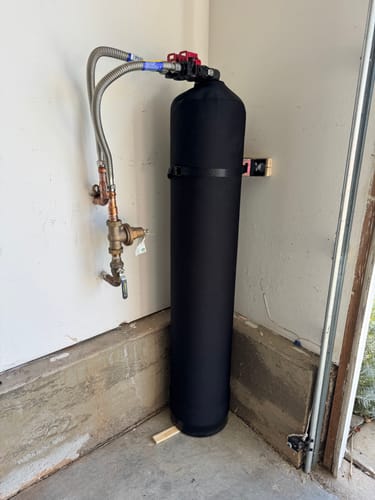
After years of band-aid solutions, I committed to finding a permanent answer to our iron problem. My research journey took me deep into the world of water treatment technologies, and I quickly learned that not all iron filters are created equal.
The first thing I discovered was that iron exists in two primary forms in well water: ferrous (dissolved) and ferric (oxidized). Our water test confirmed we were dealing primarily with ferrous iron, which is invisible when it first comes out of the tap but oxidizes rapidly when exposed to air. This explained why our water looked clear initially but turned orange within minutes of sitting in a glass.
I spent weeks researching different treatment approaches. Traditional sediment filters only catch ferric iron that's already oxidized, making them useless for our situation. Water softeners can remove some ferrous iron, but they're not designed for iron levels above 1-2 PPM, and our 3.2 PPM was way beyond their effective range.
The real breakthrough in my research came when I learned about oxidation-based iron filtration systems. These systems force the conversion of ferrous iron to ferric iron, then filter out the oxidized particles. There are several methods for achieving this oxidation, and understanding the differences became crucial to my decision.
Air injection systems introduce oxygen directly into the water stream, creating an oxidation reaction that converts dissolved iron into filterable particles. This appealed to me because it doesn't require chemicals—just air and proper filtration media. The process is completely natural and doesn't add anything artificial to our water supply.
Katalox Light emerged as the standout filtration media during my research. Unlike traditional sand or anthracite filters, Katalox Light combines filtration with catalytic oxidation. The media itself promotes the oxidation reaction while simultaneously filtering out the resulting particles. This dual-action approach seemed more efficient than systems requiring separate oxidation and filtration stages.
I also researched system sizing and capacity requirements. With our household of four people and average daily water usage of about 300 gallons, I needed a system that could handle peak demand without pressure drops. Flow rate became a critical specification—I wanted at least 8-10 gallons per minute to maintain adequate pressure during multiple simultaneous uses.
The Iron Master's specifications aligned perfectly with my requirements: 10 GPM flow rate, air injection oxidation, and Katalox Light filtration media.
Certification and testing standards also factored into my decision. I looked for systems tested to NSF/ANSI Standard 61 for health effects and systems with proven track records in high-iron applications. The Iron Master's testing documentation and third-party certifications provided the credibility I needed.
Cost analysis revealed that while the initial investment was significant, the long-term value made sense. Comparing the purchase price to ongoing bottled water costs, appliance damage prevention, and potential home value improvement, the return on investment was clear within two years.
Unboxing and First Impressions
The Iron Master arrived via freight delivery on a Tuesday morning, packaged more securely than I expected. The driver helped me move the main tank into my garage, where I could inspect everything before installation. My first impression was that this system meant business—it's substantial and well-built.
The main filtration tank stands 54 inches tall with a 10-inch diameter, weighing about 85 pounds when empty. The fiberglass construction feels solid without being unnecessarily heavy. Unlike some systems I'd seen that looked like they belonged in a laboratory, the Iron Master has a clean, professional appearance that wouldn't look out of place in a utility room.
The control head impressed me immediately. The Fleck 2510SXT controller features a clear digital display and intuitive programming interface. Having struggled with mechanical timers on previous water treatment equipment, this electronic control was a welcome upgrade.
The air injection system components were packaged separately and included everything needed for installation: the air injection valve, pressure tank, check valves, and all necessary fittings. The quality of these components exceeded my expectations—brass fittings where they matter, quality polymer construction elsewhere.
Documentation quality often reveals a lot about a company's attention to detail. The Iron Master came with comprehensive installation manuals, operation guides, and maintenance schedules. The instructions were clearly written by someone who actually understood the installation process, not just copied from generic templates.
I particularly appreciated the detailed system schematic that showed exactly how each component connected. Having installed other water treatment equipment in the past, I knew how valuable clear diagrams would be during the actual installation process.
The Katalox Light filtration media arrived in sealed bags with clear labeling and handling instructions. At first glance, it looks similar to other filtration media, but you can feel the difference in weight and density. Each granule has a dark, almost metallic appearance that hints at its catalytic properties.
One pleasant surprise was the inclusion of a water testing kit for measuring iron levels before and after installation.
This demonstrated the manufacturer's confidence in their product and provided me with the tools to verify performance. Too many companies sell filtration systems without giving customers any way to measure actual results.
Installation Experience and Setup

Installing the Iron Master required more planning than I initially anticipated, but the process was straightforward once I understood the system requirements. The biggest challenge wasn't technical complexity—it was coordinating all the necessary components in the right sequence.
Pre-installation preparation took about two hours. I needed to shut off water to the house, drain the existing system, and create space for the new equipment. The Iron Master requires more room than a simple sediment filter due to the air injection components and larger tank size. I ended up relocating some storage items to accommodate the 54-inch height clearance needed for media changes.
The plumbing connections were more involved than basic filter swaps but well within DIY capabilities. The system requires both inlet and outlet connections, plus a drain line for backwash cycles and an electrical connection for the control head. I spent extra time ensuring proper pipe support, knowing that vibration during backwash cycles could stress connections over time.
Installing the air injection system required the most attention to detail. The air injection valve must be positioned precisely in the water line to achieve proper mixing. Too close to the tank and you lose oxidation time; too far away and you lose dissolved air. The instructions specified 18-24 inches of straight pipe between the injection point and tank inlet, which I followed exactly.
The Fleck control head programming was surprisingly intuitive. Instead of complex timing wheels or difficult-to-read displays, the digital interface walks you through each setting with clear prompts.
I programmed it for our household size, water https://www.softprowatersystems.com/collections/iron-well-water-filters hardness level, and iron concentration. The system automatically calculates optimal backwash frequency and duration based on these parameters.
First startup revealed the importance of proper air bleeding and pressure adjustment. The air injection system needs time to establish proper air-to-water ratios, and the initial water output showed some air bubbles—completely normal according to the instructions. Within 30 minutes, the system had stabilized and water flow appeared normal.
The initial regeneration cycle took about 45 minutes and used approximately 150 gallons of water for backwashing. I was impressed by how quietly the system operated compared to older mechanical systems I'd experienced.
The electronic controls managed the entire cycle automatically, and the display kept me informed of each stage's progress.
One installation tip I learned the hard way: install a bypass valve even if you think you won't need it. Having the ability to temporarily bypass the system for maintenance or troubleshooting proved invaluable during the first few weeks as I fine-tuned the settings.
Performance Testing and Measurable Results
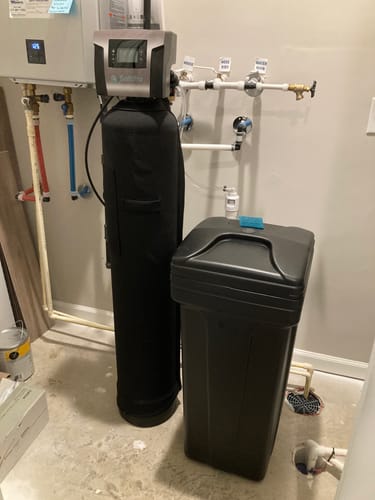
The real test of any iron filtration system isn't what it promises—it's what it actually delivers in daily use. I approached testing the Iron Master with the same methodical approach I'd used for research, measuring both quantitative results and qualitative improvements.
Using the included test kit, I measured our incoming iron levels at 3.1 PPM, consistent with previous professional testing. After 48 hours of operation, post-filtration levels measured 0.1 PPM—a 97% reduction that exceeded my expectations.
But numbers only tell part of the story. The visual improvements were immediately obvious to everyone in our household. Water from every faucet ran crystal clear, even after sitting in glasses for hours. The metallic taste that had plagued our drinking water completely disappeared.
I conducted a simple but revealing test using clear mason jars. I filled four jars with untreated well water and four with Iron Master-filtered water, then let them sit on the kitchen counter for 24 hours. The untreated samples developed the familiar orange tint and sediment, while the filtered samples remained perfectly clear.
Flow rate testing confirmed the system maintained excellent water pressure throughout the house. Using a 5-gallon bucket and stopwatch, I measured 9.2 gallons per minute at the kitchen sink during single use, and 7.8 GPM with simultaneous shower and dishwasher operation. These results met our peak demand needs without the pressure drops I'd experienced with previous filtration attempts.
The true performance test came during our first backwash cycle. Watching the initial backwash water flow revealed just how much iron the system had captured in its first week of operation.
The discharge water was deep orange-red, clearly showing the oxidized iron being flushed from the Katalox media. This visual confirmation proved the system was working exactly as designed.
Over the following month, I continued monitoring performance with weekly testing. Iron levels consistently remained below 0.2 PPM, well within acceptable ranges. More importantly, the system maintained this performance without any manual intervention or adjustment.
I also tested the system's response to varying iron concentrations by monitoring performance after heavy rain events, which sometimes affect well water quality. The Iron Master maintained consistent results regardless of seasonal variations in our well water chemistry.
One unexpected benefit was improved water clarity beyond just iron removal. The Katalox media also filtered out fine sediment and particles I hadn't realized were present in our water supply.
Ice cubes became crystal clear instead of cloudy, and even our coffee maker seemed to brew better-tasting coffee.
Daily Life Improvements and Household Impact
Six months after installation, the Iron Master has transformed our daily routines in ways I didn't fully anticipate. The most obvious changes are visual, but the quality-of-life improvements extend far beyond what you can see.
Laundry day is no longer a source of anxiety. My wife can confidently wash her white clothes without fear of orange staining. We've actually started buying white linens and towels again—something we'd avoided for years due to inevitable discoloration.
Our teenage daughter noticed the difference in her hair within the first week. She'd complained for months that her blonde highlights looked brassy, and we'd blamed it on swimming pool chlorine. Turns out, the iron in our water was the real culprit.
Her hair stylist even commented on the improvement during her next appointment.
Bathroom cleaning became significantly easier and less frequent. The orange rings in our toilet bowls simply stopped forming, and our white porcelain sinks stay white with normal cleaning.
I used to scrub those rust stains weekly with harsh chemicals; now, regular bathroom cleaner maintains pristine appearance.
Kitchen improvements were equally dramatic. Our stainless steel sink maintains its original luster, and water spots on dishes became minimal and easy to remove.
The dishwasher's performance improved noticeably—glasses come out sparkling instead of cloudy with iron deposits.
Perhaps the most satisfying change is hospitality confidence. We can offer guests tap water without embarrassment, and several friends have commented on how good our water tastes.
We've completely eliminated bottled water purchases for drinking, saving approximately $40 monthly while reducing plastic waste.
Our morning routines simplified significantly. No more waiting for water to clear up before filling coffee pots or brushing teeth.
Every faucet delivers clean, clear water immediately. This might seem minor, but when multiplied across daily activities, it saves time and reduces frustration.
The impact on appliances has been substantial. Our coffee maker, which had developed mineral buildup and slow brewing times, returned to normal operation after the iron-free water flushed out accumulated deposits.
Our water heater seems to be operating more efficiently, and I expect its lifespan will be extended by reducing iron bacteria and corrosion.
One unexpected benefit was improved skin comfort. Both my wife and I noticed less skin dryness after showers, and the lingering metallic odor that sometimes clung to our skin completely disappeared.
Operational Costs and Long-Term Value
Understanding the true cost of water treatment goes beyond the initial purchase price.
After six months of operation, I've tracked every expense associated with the Iron Master to provide realistic ownership cost projections.
The system's electrical consumption is minimal. The Fleck control head draws power only during regeneration cycles and for the digital display. Based on our local electricity rates, monthly electrical costs average $3-4.
This is far less than I'd anticipated and significantly lower than electric oxidation systems I'd considered.
Water consumption during backwash cycles occurs every 4-5 days, using approximately 150 gallons per cycle. At our well water costs (primarily pump operation), this adds about $8-10 monthly to our water usage.
The frequency is automatically adjusted based on actual iron loading, so busier periods with higher water usage trigger more frequent regeneration.
The Katalox Light media requires replacement every 5-7 years under normal operating conditions. Replacement media costs about $200-250, averaging $35-50 annually for media replacement reserves.
This compares favorably to cartridge-based systems requiring quarterly replacements at $40-60 per cartridge set.
Maintenance costs have been minimal. The system is designed for homeowner maintenance, requiring only periodic inspection of air injection components and annual system sanitization.
I perform these tasks myself in about 30 minutes, using readily available sanitizing solutions costing $15-20 annually.
Comparing total operational costs to our previous situation reveals substantial savings. We were spending $40 monthly on bottled drinking water, plus $20-30 monthly on specialized cleaning products to combat iron stains.
The Iron Master's $20-25 monthly operational cost represents a net savings of $35-45 monthly.
Beyond direct cost savings, the system has prevented expensive appliance damage. Our dishwasher and washing machine are operating more efficiently, potentially extending their lifespans by years.
Water heater efficiency improvements should reduce energy costs and delay replacement needs.
The value proposition becomes even stronger when considering home resale value. Professional water treatment systems are attractive features for potential buyers, particularly in areas with known water quality challenges.
Real estate agents in our area confirm that homes with quality water treatment systems often command premium prices.
Maintenance Reality and Long-Term Ownership
Six months of ownership has given me realistic insight into the Iron Master's maintenance requirements and long-term ownership experience.
The beauty of this system lies in its automated operation. Once properly programmed, it manages regeneration cycles, monitors performance, and adjusts operation based on actual water usage patterns.
I check the system weekly during my routine basement inspections, but it rarely requires attention.
Monthly maintenance consists of visual inspection of connections, checking the air pressure tank gauge, and confirming proper operation of the air injection valve. These tasks take about 10 minutes and require no special tools or expertise.
The control head displays diagnostic information that makes troubleshooting straightforward when issues arise.
The air injection system requires the most attention, though "attention" is probably too strong a word. Every few months, I check air pressure in the injection tank and add air if needed using a standard tire pump.
The system maintains stable air pressure under normal conditions, but checking prevents potential performance issues.
Annual sanitization is the most involved maintenance task. This involves bypassing the system, adding chlorine solution to sanitize the tank and media, then flushing thoroughly to remove residual chlorine.
The process takes about 90 minutes start to finish, with most time spent waiting for contact time and flushing cycles.
I've had one minor issue during six months of operation: the air injection valve occasionally releases excess air, creating temporary bubbles in faucet output. This resolved itself after adjusting air pressure slightly lower than my initial setting.
The instruction manual addressed this scenario specifically, making troubleshooting simple.
Media inspection after six months showed the Katalox Light maintaining its original appearance and flow characteristics. Unlike sand or carbon media that can channel or degrade quickly, Katalox Light appears designed for long-term stability.
The manufacturer's 5-7 year media life expectancy seems realistic based on current condition.
System monitoring capabilities exceed my expectations. The Fleck control head tracks cycle counts, total gallons processed, and regeneration frequency.
This data helps optimize settings and provides early warning of potential issues. I can track system performance trends and adjust programming if water usage patterns change.
Overall, the Iron Master requires less maintenance attention than our previous water softener while delivering superior iron removal performance.
The reliability and automated operation make it an ideal solution for homeowners who want effective water treatment without constant monitoring or maintenance.